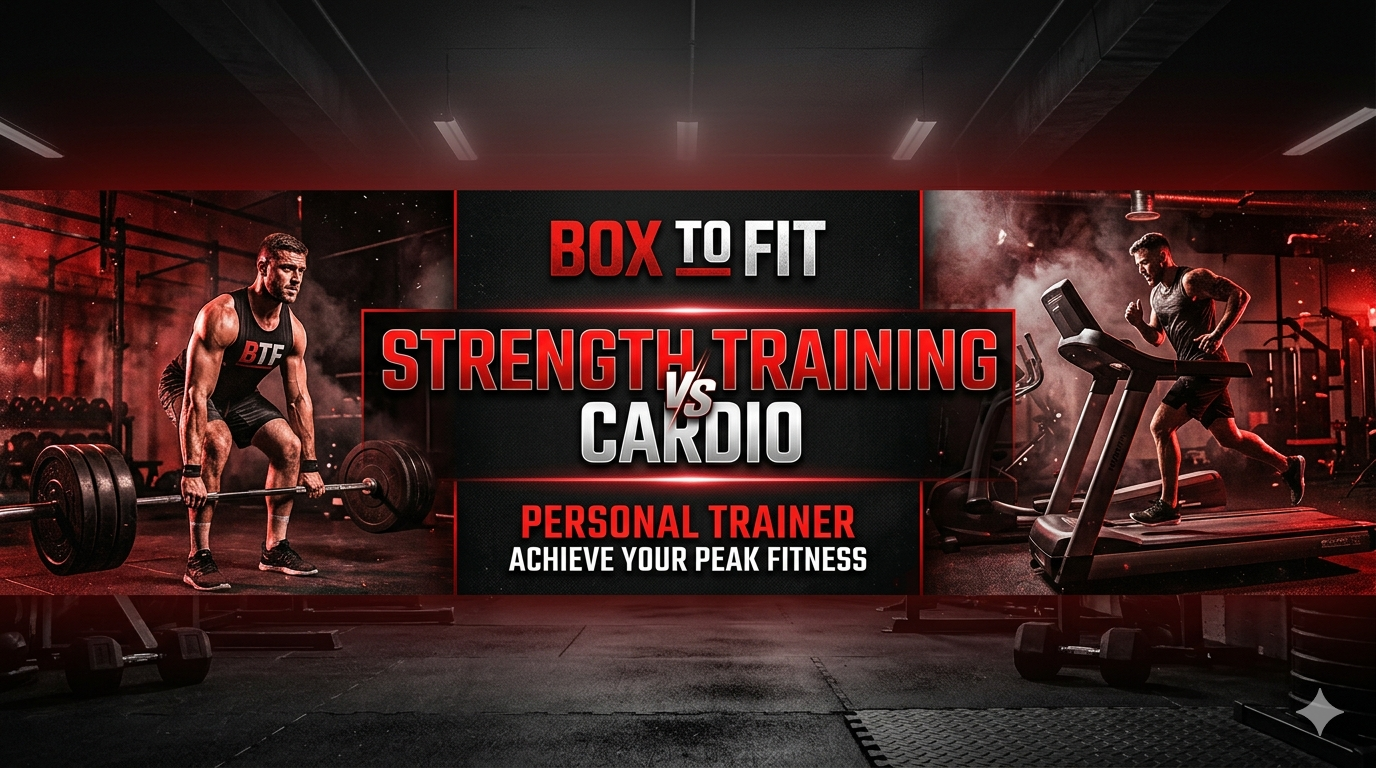
Strength Training vs Cardio: Which Is Better for You
May 1, 2026
Strength Training vs Cardio: What Should You Focus On
Strength Training vs Cardio is one of the most debated topics in the fitness world, especially for people trying to lose weight, build muscle, or improve overall health. At BOX TO FIT (BTF), where science-backed training meets real athletic experience, this debate is approached with clarity, precision, and results-driven insights rather than myths or trends.
Understanding the real difference between cardio and resistance training is crucial before deciding what to prioritize. Cardio typically includes activities like running, cycling, or HIIT sessions that elevate your heart rate for extended periods. Strength training, on the other hand, involves resistance-based exercises such as weightlifting, bodyweight training, or functional fitness routines designed to build muscle and improve strength.
Follow the fitness journey on Instagram and locate the facility on Google Maps.
📋 Table of Contents
- → Understanding the Core Difference
- → Strength Training Benefits vs Cardio Benefits
- → Cardio vs Weight Training for Fat Loss
- → Which is Better Cardio or Strength Training for Weight Loss
- → Cardio vs Strength Training for Muscle Gain
- → Real-World Training Approach at BOX TO FIT
- → Common Mistakes in Strength Training vs Cardio
- → Role of HIIT in Strength Training vs Cardio
- → FAQs
💪 Strength Training vs Cardio
Discover which training style delivers better results for your fitness goals
Understanding the Core Difference
The difference between cardio and resistance training lies in how each system affects your body. Cardio focuses primarily on improving cardiovascular endurance and burning calories during the activity. Strength training builds lean muscle mass, which increases your resting metabolic rate, allowing you to burn calories even at rest.
At BTF, this distinction is not just theoretical. Programs are built using a hybrid model—combining boxing, strength, CrossFit, and HIIT—to ensure clients don't have to choose one over the other blindly.
Difference Between Cardio and Resistance Training
Cardio exercises elevate your heart rate and improve cardiovascular endurance through sustained activity. Resistance training uses external resistance to build muscle strength, increase bone density, and boost metabolism through progressive overload.
Strength Training Benefits vs Cardio Benefits
When comparing strength training benefits vs cardio benefits, both offer powerful advantages but serve different purposes.
Key Benefits of Strength Training
Strength training:
Increases muscle mass
Boosts metabolism long-term
Improves bone density
Enhances functional strength
Key Benefits of Cardio
Cardio:
Improves heart health
Burns calories quickly
Enhances endurance
Reduces stress and improves mood
At BOX TO FIT, athletes and beginners alike experience how combining these benefits creates a balanced, sustainable fitness journey rather than short-term results.
Cardio vs Weight Training for Fat Loss
One of the most searched questions is cardio vs weight training for fat loss. The truth is, cardio burns more calories during the workout, but strength training burns more calories over time due to increased muscle mass.
For example, a high-intensity boxing session at BTF can burn significant calories instantly, while strength sessions ensure your metabolism stays elevated for hours after the workout. This combination is why BTF emphasizes integrated training instead of isolated routines.
How Cardio Burns Calories
Cardio creates an immediate calorie deficit by elevating heart rate and increasing energy expenditure during the activity. High-intensity cardio sessions can burn 400-800 calories per hour depending on intensity and body weight.
How Strength Training Supports Fat Loss
Strength training builds muscle tissue, which increases resting metabolic rate. This means you burn more calories throughout the day, even at rest, creating a sustainable fat loss environment.
Which is Better Cardio or Strength Training for Weight Loss
When people ask, which is better cardio or strength training for weight loss, the honest answer is neither alone is optimal.
Cardio helps create an immediate calorie deficit. Strength training preserves muscle while you lose fat, preventing the "skinny fat" look. Without strength training, weight loss often leads to muscle loss, slowing metabolism and making long-term maintenance difficult.
At BTF, clients are guided through structured programs where both elements are strategically combined. This ensures fat loss without compromising strength, performance, or body composition.
Short-Term vs Long-Term Results
Cardio provides quick short-term weight loss through immediate calorie burn. Strength training delivers superior long-term results by building muscle that continuously burns calories and maintains metabolic health.
Cardio vs Strength Training for Muscle Gain
Another key comparison is cardio vs strength training for muscle gain. Strength training is essential for building muscle. Cardio, if overdone, can actually interfere with muscle growth.
However, when used correctly, cardio enhances recovery, improves endurance, and supports overall performance. This is why at BOX TO FIT, cardio is not eliminated—it is optimized.
Role of Strength Training in Muscle Growth
Strength training creates the mechanical tension and metabolic stress necessary for muscle protein synthesis. Progressive overload through resistance training is the primary driver of muscle hypertrophy.
How Cardio Impacts Muscle Development
Moderate cardio improves blood flow and nutrient delivery to muscles, supporting recovery. However, excessive cardio can create a catabolic environment that interferes with muscle growth and recovery.
Real-World Training Approach at BOX TO FIT
BTF's approach is built on real athlete experience. Founder Amit, with his international boxing background, understands that performance comes from balance, not extremes.
A typical training week at BTF might include:
Strength-focused sessions (compound lifts, functional movements)
Boxing-based cardio sessions
HIIT circuits for fat burn
Recovery-focused mobility work
This model reflects real-world athletic training rather than social media trends.
Hybrid Training Model
BOX TO FIT's hybrid training model integrates strength training, boxing cardio, HIIT, and functional fitness into a comprehensive system that addresses all aspects of physical development without forcing clients to choose one over the other.
Weekly Workout Structure
A balanced weekly structure includes 3-4 strength sessions, 2-3 cardio/boxing sessions, and 1 recovery day, ensuring optimal development across all fitness components while preventing overtraining.
Common Mistakes in Strength Training vs Cardio
When analyzing strength training vs cardio, most beginners make these mistakes:
Doing excessive cardio without strength training
Ignoring progressive overload in strength workouts
Following random online routines without structure
At BOX TO FIT, coaching eliminates these errors by providing structured, goal-specific training.
Overdoing Cardio
Excessive cardio without adequate strength training leads to muscle loss, decreased metabolism, and eventual weight loss plateaus. This creates a cycle where more cardio is needed for the same results.
Ignoring Strength Training
Focusing solely on cardio while ignoring strength training results in poor body composition, reduced functional strength, and increased risk of injury due to weak muscles and connective tissues.
Role of HIIT in Strength Training vs Cardio
HIIT (High-Intensity Interval Training) bridges the gap between cardio and strength. It combines both elements into a single session.
This is why BTF uses HIIT extensively:
Burns fat quickly
Builds endurance
Maintains muscle engagement
It is one of the most effective answers to the cardio vs weight training for fat loss debate.
Why HIIT Works
HIIT creates a powerful metabolic response by combining high-intensity bursts with recovery periods, maximizing calorie burn during and after workouts while preserving muscle mass better than steady-state cardio.
Long-Term Sustainability and Results
The biggest factor in which is better cardio or strength training for weight loss is sustainability.
People stick to routines that:
Show results
Feel engaging
Fit their lifestyle
BTF's hybrid model ensures all three.
Building a Consistent Routine
Consistency trumps intensity in long-term fitness success. A balanced approach combining strength training and cardio creates variety, prevents burnout, and maintains motivation over extended periods.
Expert Insight from BOX TO FIT
With international exposure and athletic experience, BTF emphasizes that fitness is not about extremes. It is about balance, precision, and consistency.
Their philosophy:
"Exercise is medicine"
"Luxury lies in precision"
"Results come from smart training, not just hard training"
This approach makes the strength training benefits vs cardio benefits discussion practical rather than theoretical.
BTF Philosophy
"Results come from smart training, not just hard training"
— BOX TO FIT Philosophy
FAQs on Strength Training vs Cardio
Expert answers to help you understand strength training vs cardio for your fitness goals
What is the main difference between cardio and resistance training?
The difference between cardio and resistance training lies in their purpose—cardio improves heart health and burns calories, while resistance training builds muscle and boosts metabolism.
Which burns more fat: cardio or weight training?
In the cardio vs weight training for fat loss debate, cardio burns more calories instantly, but weight training leads to better long-term fat loss.
Which is better cardio or strength training for weight loss?
When asking which is better cardio or strength training for weight loss, the best approach is combining both for optimal results.
Can I lose weight with only cardio?
Yes, but relying only on cardio can lead to muscle loss. Combining it with strength training is more effective.
Is strength training necessary for fat loss?
Yes, because it preserves muscle and increases metabolism, making fat loss more sustainable.
Does cardio kill muscle gains?
Excessive cardio can impact muscle growth, which is why balance is important in cardio vs strength training for muscle gain.
How often should I do cardio and strength training?
A balanced routine includes both, similar to BTF programs that combine multiple training styles weekly.
What are the key strength training benefits vs cardio benefits?
Strength training builds muscle and metabolism, while cardio improves endurance and heart health.
Is HIIT better than traditional cardio?
HIIT combines benefits of both cardio and strength, making it highly effective for fat loss.
What is the best training method for beginners?
A hybrid approach like BOX TO FIT's, combining strength, cardio, and HIIT, is the most effective and sustainable. Explore our beginner-friendly programs.
💬 Start Your Balanced Fitness Journey
Stop choosing between strength and cardio - get the best of both worlds with our hybrid training approach


 Mon - Sat : 06:00 am - 10:00 pm (Sunday closed)
 +91 77195-60422