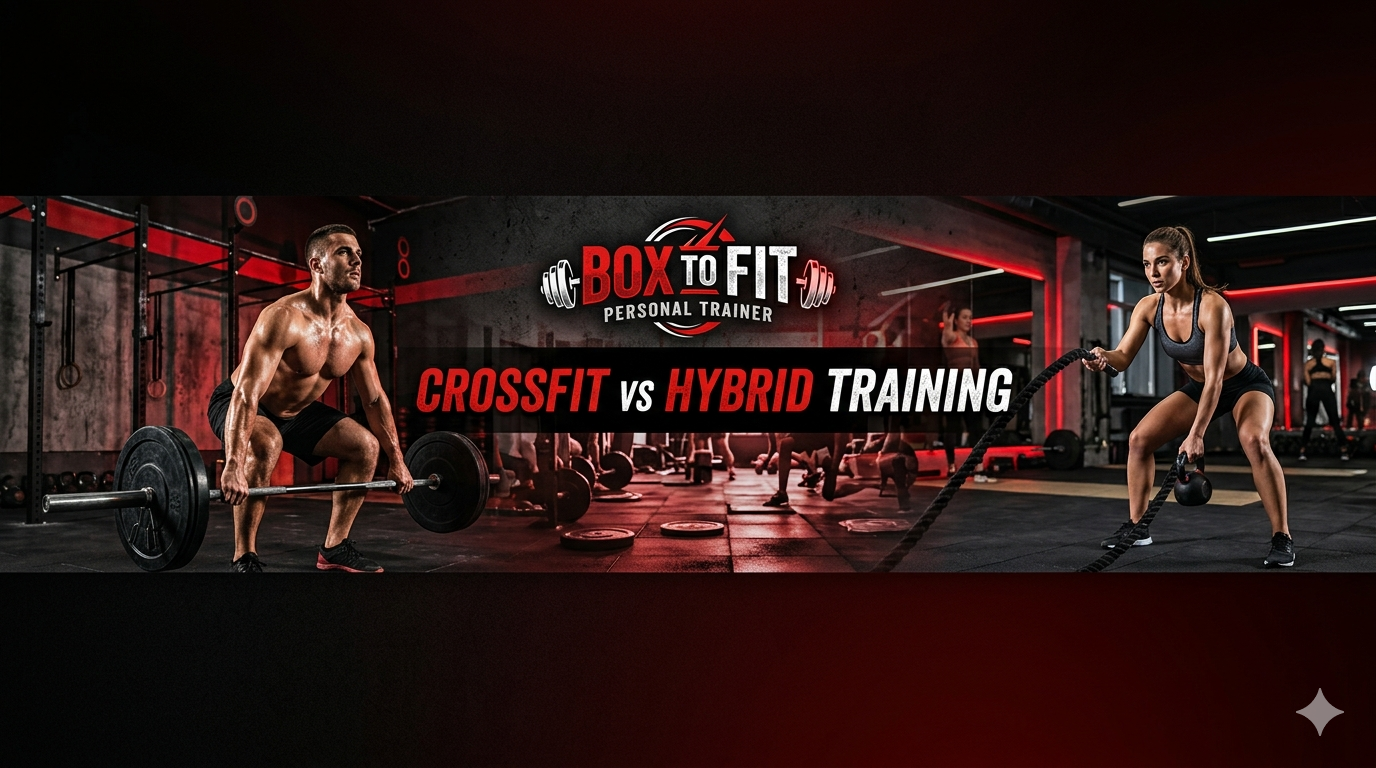
CrossFit vs hybrid training
May 5, 2026
CrossFit vs Hybrid Training: Which Is Safer & Effective?
CrossFit vs hybrid training is one of the most debated topics in modern fitness, especially among athletes, gym enthusiasts, and beginners trying to choose the right path. With the rise of performance-based training systems, people are no longer satisfied with basic workouts—they want efficiency, safety, and long-term results. This is where understanding the real difference between these two training styles becomes crucial.
At BOX TO FIT (BTF), a science-based training ecosystem founded by professional boxer Amit, the philosophy is clear: training must be purposeful, structured, and sustainable. Combining boxing, strength training, HIIT, and conditioning, BTF provides a practical lens through which we can analyze CrossFit vs hybrid training from an expert perspective.
Follow the fitness journey on Instagram and locate the facility on Google Maps.
📋 Table of Contents
- → Understanding CrossFit Training
- → Understanding Hybrid Training
- → CrossFit vs Hybrid Training: Core Differences
- → Safety Comparison: Which One Is Safer?
- → Effectiveness: Performance vs Sustainability
- → Real-World Application at BOX TO FIT
- → Who Should Choose CrossFit?
- → Who Should Choose Hybrid Training?
- → Final Verdict
- → FAQs
⚡ CrossFit vs Hybrid Training
Discover which training style is safer, more effective, and right for your goals
Understanding CrossFit Training
CrossFit is a high-intensity fitness program built around constantly varied functional movements. It typically includes Olympic lifts, gymnastics, cardio, and timed workouts known as WODs (Workout of the Day).
When analyzing CrossFit vs functional training differences, CrossFit stands out due to its competitive nature and emphasis on performance metrics like speed, reps, and load.
Key Features of CrossFit
High-intensity interval training (HIIT)
Constantly varied workouts
Community-driven environment
Focus on performance and competition
CrossFit vs Gym Training Benefits
While discussing CrossFit vs gym training benefits, CrossFit offers better conditioning and endurance compared to traditional gym routines, but it may compromise technique if not properly supervised.
Understanding Hybrid Training
Hybrid training blends strength training with endurance and conditioning work. A well-designed hybrid training workout plan includes weightlifting, cardio, mobility work, and recovery sessions.
Unlike CrossFit, hybrid training is structured and periodized. It focuses on progressive overload while maintaining endurance—making it ideal for long-term fitness goals.
At BTF, hybrid training is refined using boxing drills, strength circuits, and metabolic conditioning, creating a balanced system that aligns with real-world performance.
What Is a Hybrid Training Workout Plan?
A hybrid training workout plan is a structured program that combines strength training, cardiovascular conditioning, mobility work, and recovery into a periodized system designed for progressive, sustainable improvement.
Strength and Endurance Hybrid Training Explained
Strength and endurance hybrid training integrates resistance training with cardiovascular work in a balanced format, ensuring both physical qualities develop simultaneously without one compromising the other.
CrossFit vs Hybrid Training: Core Differences
When comparing CrossFit vs hybrid training, the difference lies in structure, intensity, and sustainability.
Training Structure
CrossFit: Randomized workouts
Hybrid: Planned and periodized programs
A structured hybrid training workout plan ensures progressive improvement without overtraining.
Intensity vs Recovery
CrossFit pushes maximum intensity frequently, whereas strength and endurance hybrid training balances effort with recovery.
This is a major factor when evaluating safety.
Skill Requirement
CrossFit involves complex lifts like snatches and cleans. Without proper coaching, injury risk increases.
Hybrid training simplifies movement patterns while still delivering results.
Safety Comparison: Which One Is Safer?
Safety is a major concern in the debate of CrossFit vs hybrid training.
CrossFit Safety Concerns
High risk of overtraining
Technical lifts under fatigue
Competitive pressure leading to poor form
Hybrid Training Safety Advantages
Controlled progression
Focus on form and technique
Balanced workload
At BTF, trainers emphasize precision—"Luxury lies in precision"—ensuring every rep is intentional. This reduces injury risk significantly compared to unstructured high-intensity sessions.
Effectiveness: Performance vs Sustainability
When evaluating CrossFit vs hybrid training, effectiveness depends on your goal.
CrossFit Effectiveness
Rapid fat loss
Improved cardiovascular fitness
High calorie burn
But when comparing CrossFit vs bodybuilding comparison, CrossFit lacks targeted muscle hypertrophy due to its varied nature.
Hybrid Training Effectiveness
Builds lean muscle
Improves endurance
Enhances athletic performance
A well-designed hybrid training workout plan allows consistent progress without burnout.
CrossFit vs Bodybuilding Comparison
| Aspect | CrossFit | Bodybuilding |
|---|---|---|
| Goal | Performance | Muscle size |
| Training Style | Functional + HIIT | Isolation |
| Flexibility | High | Low |
Hybrid training combines the best of both:
Strength like bodybuilding
Endurance like CrossFit
Strength and Endurance Balance
One of the biggest advantages of strength and endurance hybrid training is balance.
CrossFit often leans heavily on conditioning, whereas hybrid training ensures:
Strength development
Cardiovascular fitness
Mobility and flexibility
This makes hybrid training more practical for everyday athletes and working professionals.
Real-World Application at BOX TO FIT
At BTF, training is not just about workouts—it's about transformation.
Founded after a life-changing setback, Amit built BTF with a vision to combine:
Boxing for fat loss
Strength training for power
CrossFit elements for intensity
HIIT for efficiency
This creates a hybrid system that addresses the limitations of both approaches in CrossFit vs hybrid training.
CrossFit vs Functional Training Differences
Functional training focuses on real-life movements like squatting, pushing, and pulling.
In CrossFit vs functional training differences, CrossFit includes functional movements but adds intensity and competition.
Hybrid training, however, refines functional training with structure and progression.
Who Should Choose CrossFit?
Competitive athletes
People who enjoy group workouts
Those seeking high-intensity challenges
Who Should Choose Hybrid Training?
Beginners
Professionals with limited time
People focused on long-term health
Expert Insight from BTF
BTF's approach is grounded in real athletic experience. Their training philosophy reflects:
Scientific programming
Injury prevention
Sustainable results
Their belief: "Exercise is a medicine to the body."
This aligns perfectly with the idea that CrossFit vs hybrid training should not just be about intensity—but about longevity.
Final Thoughts
The debate of CrossFit vs hybrid training is not about which is better universally—it's about which is better for you.
CrossFit delivers intensity and excitement, but hybrid training offers balance, safety, and sustainability.
At BTF, the focus is clear: results without compromise.
Programming: The Real Game Changer
The biggest difference in CrossFit vs hybrid training lies in programming.
CrossFit workouts are unpredictable. While this keeps things exciting, it lacks long-term progression.
A structured hybrid training workout plan, on the other hand, includes:
Strength phases
Endurance cycles
Recovery periods
This ensures consistent growth without plateaus.
Fat Loss Efficiency
Both training styles are effective for fat loss, but their approach differs.
CrossFit:
High calorie burn per session
Intense metabolic conditioning
Hybrid Training:
Sustainable fat loss
Better hormonal balance
At BTF, boxing plays a major role in fat loss—making strength and endurance hybrid training even more effective.
Injury Risk: The Hidden Factor
In the debate of CrossFit vs hybrid training, injury risk is often overlooked.
CrossFit injuries often occur due to:
Poor form under fatigue
Overtraining
Lack of mobility work
Hybrid training minimizes risk by:
Emphasizing technique
Including recovery sessions
Avoiding unnecessary strain
Mental Engagement and Sustainability
One underrated aspect of CrossFit vs hybrid training is mental sustainability.
CrossFit:
High motivation initially
Risk of burnout
Hybrid Training:
Balanced workload
Long-term consistency
BTF's philosophy focuses on making fitness a lifestyle, not a temporary phase.
Amit's journey—from setback to building BTF—adds credibility to hybrid training.
His system reflects:
International training standards
Boxing-based conditioning
Precision-focused programming
This reinforces trust in hybrid training as a safer and more effective solution in the CrossFit vs hybrid training debate.
Customization: One Size Doesn't Fit All
CrossFit often follows a standard format for all participants.
Hybrid training allows customization:
Based on fitness level
Based on goals
Based on recovery capacity
A personalized hybrid training workout plan ensures better results.
Long-Term Results
When evaluating CrossFit vs gym training benefits, hybrid training stands out for long-term transformation.
It provides:
Sustainable fat loss
Muscle growth
Injury prevention
Why Hybrid Training Is the Future
The fitness industry is shifting toward:
Smart training
Injury prevention
Functional strength
This aligns perfectly with strength and endurance hybrid training.
At BTF, this future is already being built.
Final Verdict
In the comparison of CrossFit vs hybrid training:
CrossFit = Intensity + Competition
Hybrid Training = Balance + Sustainability
If your goal is short-term performance, CrossFit works.
If your goal is lifelong fitness, hybrid training wins.
BTF Philosophy
"Exercise is a medicine to the body"
— BOX TO FIT Philosophy
FAQs
Expert answers about CrossFit vs hybrid training to help you make the right choice
What is the main difference in CrossFit vs hybrid training?
The key difference in CrossFit vs hybrid training is structure—CrossFit is high-intensity and varied, while hybrid training follows a planned and balanced approach.
Is hybrid training safer than CrossFit?
Yes, strength and endurance hybrid training is generally safer due to controlled progression and better recovery management.
Which is better for beginners: CrossFit or hybrid training?
Hybrid training is better because a structured hybrid training workout plan reduces injury risk and improves consistency.
How does CrossFit vs gym training benefits compare?
CrossFit improves endurance more than gym training, but hybrid training combines both strength and conditioning effectively.
Can hybrid training build muscle like bodybuilding?
Yes, unlike in CrossFit vs bodybuilding comparison, hybrid training includes strength phases that support muscle growth.
Is CrossFit good for weight loss?
Yes, CrossFit burns high calories, but hybrid training provides more sustainable fat loss.
What are CrossFit vs functional training differences?
CrossFit includes functional movements with intensity, while functional training alone focuses on movement quality.
How often should I follow a hybrid training workout plan?
Ideally 4–6 days per week, depending on your recovery and goals.
Does hybrid training include cardio?
Yes, strength and endurance hybrid training integrates cardio with resistance training.
Why is BOX TO FIT focused on hybrid training?
Because BTF believes in precision, safety, and long-term transformation—making hybrid training the most effective system. Explore our hybrid training programs.
💬 Start Your Hybrid Training Journey
Join BOX TO FIT and experience the safest, most effective training system combining boxing, strength, and conditioning


 Mon - Sat : 06:00 am - 10:00 pm (Sunday closed)
 +91 77195-60422